 Skip to content

Choosing a Veneer Matching Method: A Practical Guide
Choosing a Veneer Matching Method: A Practical Guide
What Gives Veneer Its Character ?
In wood veneer, the final appearance of a surface does not depend only on the species or the type of cut. The way veneer leaves are matched also plays a key role in shaping the final result, as it determines how the grain and natural variations relate from one leaf to the next.
Depending on the method selected, the grain can appear more symmetrical, more linear, more natural, or less repetitive. The matching technique therefore directly influences the visual rhythm, grain continuity, and overall character of a veneer face.
Understanding the different veneer matching techniques makes it easier to anticipate the final appearance and choose a solution that aligns with the intent of the project, whether it is for furniture, architectural panels, doors, or custom-made elements.
Why Is Veneer Matching Important?
A Direct Influence on the Final Appearance
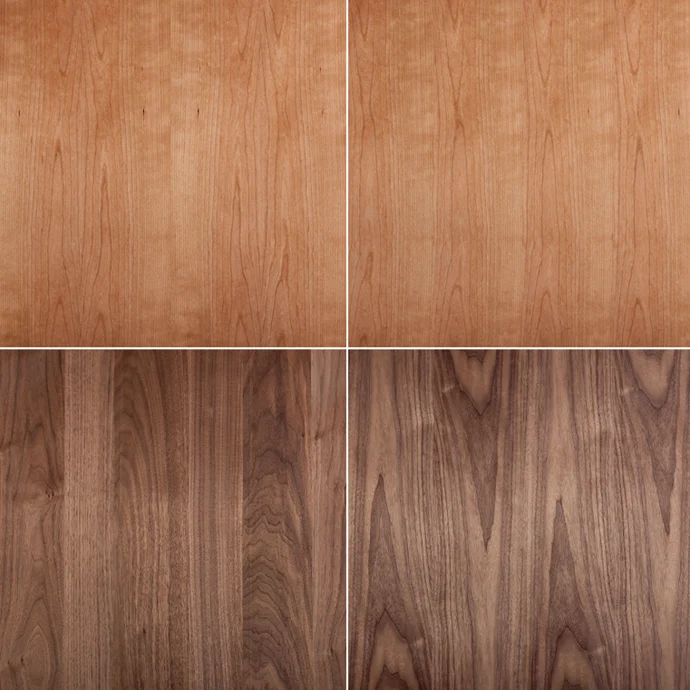
The matching technique determines how the veneer leaves relate to one another visually once they are spliced. Two veneer sheets from the same species and the same cut can produce very different results depending on their matching method. Some techniques highlight the symmetry of the grain, while others create a more linear appearance, a controlled variation, or an effect closer to solid wood. Choosing the right matching technique therefore becomes an important decision in shaping the final appearance.
A Choice Linked to the Intent of the Project
The right matching technique depends on the desired visual result. A project that requires a very regular, symmetrical, or visually striking surface will not call for the same matching method as a project where the goal is a more natural, subtle, or solid-wood-like appearance. The dimensions of the project, the desired level of continuity, the wood species, and the type of cut all influence which method is most appropriate.
The Fundamental Wood Veneer Matching Techniques
These methods refer to the way veneer leaves are placed side by side to form a complete veneer face. They directly influence the pattern, regularity, and visual rhythm of the final panel.
Book Match
Principle
Book matching consists of turning every other veneer leaf over, like the pages of an open book. The leaves are placed side by side in their natural order, while alternating the visible face. This method therefore relies on a direct relationship between two consecutive leaves, which are assembled so that they respond to one another from one joint to the next.

Visual Result
This method creates a symmetrical pattern that is often expressive. It is especially used when the goal is to highlight the natural character of the wood and create a visually balanced surface. Depending on the species, the type of cut, and the finish, color variations may appear between veneer leaves. This contrast effect, called barber pole, is a characteristic of book matching and is caused by the alternation between tight grain and open grain. In addition, when a natural characteristic appears on one leaf, it may, depending on the growth pattern of the tree, repeat in mirror image on the adjacent leaves from the same flitch.
Slip Match
Principle
Slip matching consists of placing the veneer leaves side by side in the same direction, without turning them over. The leaves therefore keep the same orientation from one leaf to the next, allowing the natural progression within a sequence to be followed more directly. Unlike book matching, the visible faces are not alternated, which creates a more linear reading of the grain.

Visual Result
This method creates a more linear reading of the grain and a visually structured surface. It tends to limit color variation between leaves, since the tight grain and open grain remain on their respective sides of the panel. A color contrast may still appear at the joints. Slip matching is especially relevant when the desired result is regular, calm, and continuous. However, this matching technique creates greater repetition within the same veneer face. As a result, when a natural characteristic, such as a flare, is present on one leaf, it may reappear on the following leaves in a similar position, reinforcing the sense of repetition.
Plank or Random Match
Principle
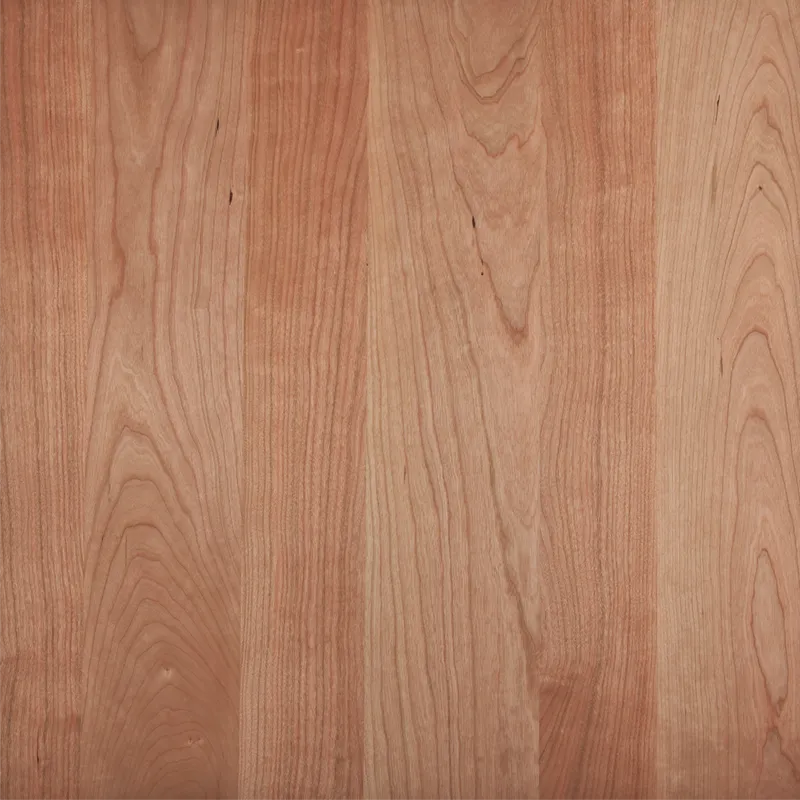
Plank matching consists of splicing veneer leaves in a way that recalls the appearance of solid wood boards placed side by side. The leaves are not necessarily arranged according to strict symmetry or a perfectly continuous progression. They can be selected and positioned to create a more varied composition, while still respecting the overall balance intended for the veneer face.
Visual Result
By combining different veneer leaf variations, plank matching can help visually unify a veneer face while preserving a more organic character. Natural characteristics are distributed more diffusely throughout the face, which generally makes them less noticeable within the overall composition. The veneer leaves used may come from different trees, different flitches, and different cuts, while still being carefully selected to provide the most uniform color possible. This matching technique is especially relevant for large-scale projects that require many veneer faces with a similar overall appearance, without creating a strictly repetitive layout.
Slip & Swing Match
Principle
Slip and swing matching consists of placing the veneer leaves side by side while rotating every other leaf 180 degrees. The leaves therefore maintain their sequence order, but their orientation alternates from one piece to the next. This method does not rely on a full mirror effect, but rather on an alternating orientation that helps distribute certain natural characteristics of the wood more evenly.

Visual Result
This method helps reduce certain color variations while softening the repetition of the grain and the natural characteristics of the wood. Because the leaves are placed side by side and every other leaf is rotated, the pattern maintains a certain continuity, but with a less repetitive rhythm than a strictly linear arrangement. Natural characteristics still remain well distributed throughout the veneer face, which helps create a structured, regular, and more nuanced appearance. Depending on the species, the type of cut, and the finish, a slight contrast may still appear at the seams.
Veneer Composition Matching Techniques
Composition matching techniques refer to the overall structure of a veneer face, as well as the relationship between multiple veneer faces or panels. They are especially important for projects where continuity, symmetry, or visual balance must be carefully controlled across large surfaces.
Continuous Match
Continuous matching consists of aligning two consecutive sheets in order to visually recreate the original veneer face. The grain naturally continues from one panel to the next, creating smooth continuity. This method is especially suited to large vertical surfaces or elements that require the pattern to extend naturally from one panel to another.

End Match
End matching consists of aligning two consecutive veneer faces or panels, with one rotated 180 degrees. This layout creates a mirror effect and a strong sense of visual symmetry from one section to the next. It is often used for tall wall panels, tabletops, or compositions where a strong central balance and a controlled visual impact are desired.

Balance Match
Balance matching consists of using veneer leaves from the same flitch with identical widths. This regularity allows for an even distribution of joints and creates a stable visual rhythm. Balanced leaves can then be arranged in book match, slip match, plank match, or slip & swing match, depending on the desired result.

Running Match
Running matching uses veneer leaves whose widths may vary slightly, particularly between the outer and inner leaves. This variation creates a more dynamic and less uniform rhythm. This approach is relevant when the goal is to preserve a natural reading of the veneer face while avoiding overly strict symmetry.

Center Match
Center matching positions the main joint exactly at the center of the final veneer face. This method requires an even number of veneer leaves and is based on balanced leaves, so the composition is distributed evenly on both sides. The result is a symmetrical, structured, and highly controlled composition.

Pair Match
Pair matching uses two consecutive veneer faces from the same flitch with the same layout. A slight natural evolution of the grain or pattern may be visible from one face to the next. This method helps create harmonious continuity between adjacent panels, particularly for doors or symmetrical surfaces.

Decorative Wood Veneer Matching Techniques
Decorative matching techniques highlight the artistic potential of wood veneer. They play with orientation, symmetry, and grain direction to create more distinctive patterns. These compositions are often used when veneer becomes a strong visual element of the project, beyond its function as a surface material.
Examples of decorative matching techniques:
- Diamond Match
- Reverse Diamond Match
- Herringbone or V Match
- Box Match
- Reverse Box Match
- Parquet Match
- 8-Piece Sunburst Match
This family of matching techniques opens the door to a wide range of compositions that can be adapted to the style of the project, the selected species, and the desired effect. Since each pattern follows a different placement logic, it is best to explore them visually in order to fully understand their possibilities. To view the main decorative matching techniques and compare their appearances, visit our dedicated page on veneer matching techniques.
How to Choose the Right Matching Technique?
Based on the Desired Appearance
The choice first depends on the desired visual effect:
- for a mirrored and symmetrical effect: Book Match
- for a more linear and repetitive appearance: Slip Match
- for a more natural appearance: Plank or Random Match
- to soften certain repetitions: Slip & Swing Match
Based on the Species and Type of Cut
The species and cut strongly influence how the matching technique is perceived. A wild grain will react differently than a finer or more uniform grain. In the same way, a flat cut can emphasize patterns, while a quarter cut or rift cut tends to highlight linearity.
Based on the Surface to Be Covered
The larger the surface, the more important the matching technique becomes. A subtle variation on a small panel can become much more visible on a full wall, a series of doors, or a group of panels. The matching technique should therefore be considered from the beginning of the project, based on the dimensions, the desired continuity, and the level of visual consistency required.
The Importance of Technical Guidance
Choosing a veneer matching technique is not limited to an aesthetic preference. It also depends on the veneer leaves, their width, their sequence, the cut, the species, and the constraints of the project. Technical guidance helps anticipate the final result more accurately and direct the choice toward the matching technique that best supports the project’s intent.
Wood veneer matching techniques directly influence the final appearance of a surface. They determine symmetry, rhythm, continuity, and the way the grain is perceived.
Whether book matched, slip matched, plank matched, slip and swing matched, or arranged in a more specialized composition, each method serves a different intention. Understanding them helps make better use of veneer’s potential and create surfaces aligned with the material, the project, and the desired result. For guidance in choosing the right matching method, our team is available through our contact page.
Share this article