 Skip to content

The Advantages of Wood Veneer
The Wood Veneer Advantages
Wood Veneer: A Natural Solution
In contemporary design and interior environments, natural materials are taking on growing importance. Wood, in particular, remains a timeless and highly valued reference. Behind this apparent simplicity lie numerous technical, aesthetic, and environmental considerations. With options ranging from solid wood to decorative panels and reconstituted or laminated wood-look surfaces, materials are often grouped together, making decision-making more complex.
Wood veneer sits precisely at the intersection of these considerations. Made from thin slices of natural wood, it preserves the look and feel of real wood while allowing for greater control over performance and application. While veneer is not always the default option, it has become a deliberate and well-considered choice, especially when material authenticity, surface stability, finish quality, and responsible use of natural resources are key priorities.
A clear understanding of wood veneer’s advantages comes from recognizing the full extent of its potential. When considered from the earliest stages of design, it becomes a material that combines quality, durability, and creative freedom.
What Exactly Is Wood Veneer?
A Clear Definition of Wood Veneer
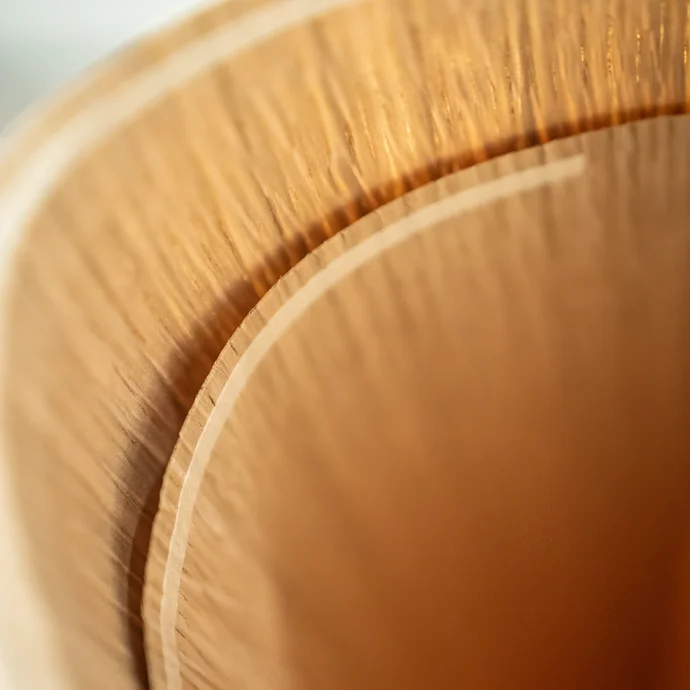
Wood veneer refers to a thin sheet of natural wood produced by slicing or cutting a carefully selected log. Its thickness, generally only a few tenths of a millimeter, is precisely controlled to ensure consistent quality. Each sheet retains the inherent characteristics of the wood from which it is cut, including grain pattern, texture, and natural color variations.
Unlike printed decorative materials such as melamine or resin-based laminate surfaces, wood veneer is a living material. It reflects the true appearance of solid wood and makes it possible to integrate natural wood into a wide range of applications, including furniture, wall cladding, and custom-built elements, while maintaining precise control over the final finish.
Wood Veneer, Solid Wood, and Decorative Panels: Key Differences
Wood veneer is often mistakenly compared to solid wood or wood-look decorative panels. These materials, however, serve very different purposes. Solid wood is used for both structural applications and for furniture, storage units, and interior components, but it remains naturally subject to dimensional movement. Decorative panels, by contrast, prioritize visual repeatability, often at the expense of material authenticity.
Positioned between these two approaches, wood veneer offers a balanced alternative. It combines the warmth and tactile qualities of natural wood with an application over a substrate that improves stability and surface continuity. This makes veneer particularly well suited to professional environments where material authenticity, visual consistency, and controlled material behavior must be maintained across multiple or large surfaces.
Advantage 1 : Authentic and Controlled Wood Aesthetics
The Visual Expression of Natural Wood

One of the key strengths of wood veneer lies in its very nature: it is genuine natural wood. Each sheet displays its own grain, texture, and tonal variation, directly originating from the log from which it is cut. This inherent uniqueness gives veneered surfaces a visual depth that is difficult to replicate with reconstituted or printed materials.
Thanks to these characteristics, veneer allows the character of wood to be integrated into a wide range of interior applications while maintaining a high level of precision in the final appearance. This authenticity is particularly valued in contexts where perceived quality is essential, such as custom furniture, kitchen cabinets, and high-end finishes.
Visual Consistency Across Large Surfaces
Beyond appearance alone, wood veneer makes it possible to maintain visual consistency, even over large surface areas. When sheets come from the same slicing sequence, taken from a single log, the pattern progresses gradually from one sheet to the next. Grain, color, and overall appearance remain visually consistent, making it easier to create balanced and harmonious surfaces.
That said, the pattern is never perfectly identical. As slicing progresses through the log, the grain evolves subtly from one sheet to the next. These natural, progressive variations add depth and richness to the material while preserving a coherent visual reading.
Advantage 2 : Optimized and Responsible Use of Wood Resources
Optimizing Raw Material Use
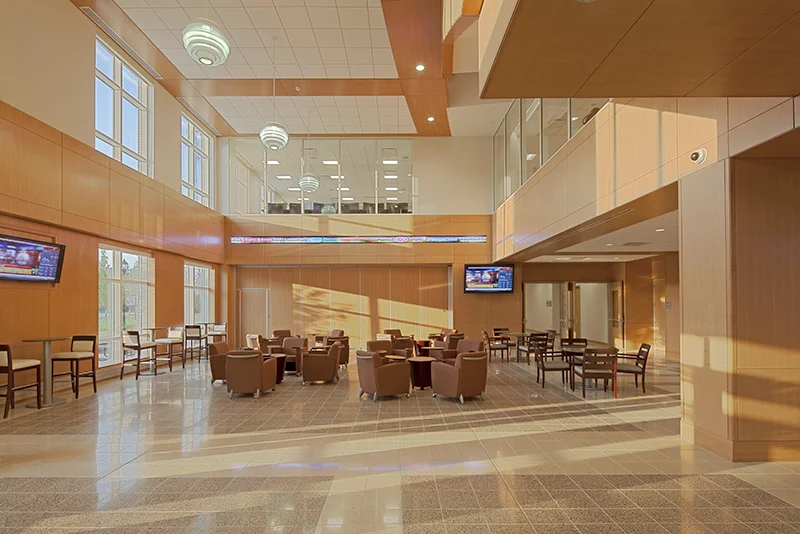
Wood veneer contributes to a more efficient use of raw material. A single log processed into veneer can cover a significantly larger surface area than if it were used as solid wood. Slicing makes it possible to produce many sheets from a limited volume of wood, resulting in a high material yield. This approach preserves the natural aesthetic qualities of wood while reducing overall material consumption. It aligns with the optimization of a renewable natural resource and is particularly relevant in contexts where responsible material management is a priority.
An Approach Aligned with Responsible Practices
By reducing the amount of wood required to cover large surfaces, veneer naturally fits within a more responsible approach to resource use. The origin of the logs is selected with care and subject to ongoing oversight, in line with responsible forest management practices. This makes it possible to balance aesthetic expectations with environmental considerations, without compromising material quality or authenticity.
Advantage 3 : Stability and Technical Performance
More Predictable Behavior Than Solid Wood
Wood is a living material, sensitive to changes in temperature and humidity. When applied to an appropriate substrate, veneer allows these effects to be better controlled. By separating aesthetic function from structural behavior, veneer offers more predictable performance than solid wood. This improved stability makes it easier to integrate wood into controlled environments and helps limit visible deformation over time, particularly on fixed surfaces such as furniture components or wall panels.
A Solution Adapted to Project Constraints
When bonded to various substrates, wood veneer adapts effectively to the specific constraints of interior fit-out projects. Furniture, wall cladding, custom-built elements benefit from the flexibility veneer offers while meeting requirements for flatness and durability. These performances rely on a proper understanding of the material and its installation conditions, which must be anticipated during the design phase.
Advantage 4 : Extensive Creative Freedom
A Wide Range of Species, Cut & Matches

Wood veneer offers a broad range of aesthetic possibilities. The diversity of available wood species, combined with different cutting methods allows for a wide variety of visual effects. Multiple matching techniques further increase the uniqueness of each project.
Customization and Bespoke Projects
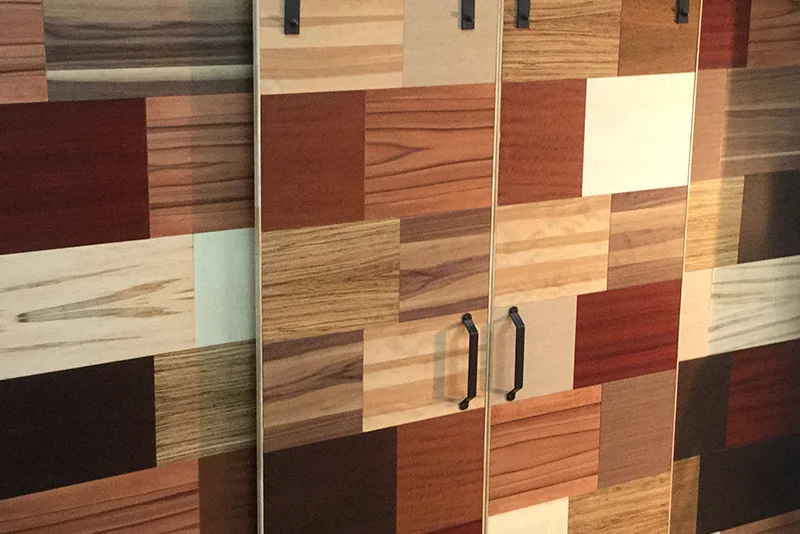
Beyond species selection, veneer allows for a high degree of customization. Grading, grain orientation, and custom matching techniques provide precise control over the final appearance. This attention to detail is particularly valued in bespoke applications.
Advantage 5 : Access to Exotic Wood Species
A More Accessible Alternative to Solid Wood
Wood veneer makes the use of rare or exotic species far more accessible than solid wood. Its minimal thickness allows large surfaces to be covered using a limited quantity of raw material, significantly reducing both cost and sourcing constraints.
This makes it feasible to incorporate sought-after species that may be costly or available only in limited quantities, while maintaining cost control. Veneer offers a practical way to highlight exceptional woods while limiting the economic constraints typically associated with solid wood.
Thoughtful Use of High-Value Wood
Using these species in veneer form allows their visual and sensory qualities to be fully expressed while limiting overall consumption. This approach preserves the value of the material and enables its integration into projects that require both quality and cost awareness.
The Limitations of Wood Veneer : A Material That Must Be Properly Understood
A Material That Requires Careful Execution
Like any natural material, wood veneer has technical characteristics that must be considered from the design stage onward. Its thinness requires careful handling and pressing to avoid damaging the sheets. A rigorous installation process is therefore essential to ensure durable, visually consistent surfaces.
The Importance of Substrates and Environmental Conditions
The behavior of wood veneer is inseparable from the substrate to which it is applied. An unsuitable or poorly prepared substrate can compromise surface stability and flatness, even when the veneer itself is of high quality. Substrate selection is therefore a decisive factor in project success. Environmental conditions also play a critical role. Variations in humidity and temperature must be anticipated as much as possible. A clear understanding of these parameters helps maximize veneer performance while minimizing long-term risks.
A Material That Benefits from Technical Guidance
Wood veneer is not a universal solution applied in the same way to every project. It often requires early-stage consideration and, in many cases, technical guidance to adapt the material to the specific constraints of each project. This requirement is less a limitation than an indicator of quality. When properly understood and implemented, veneer fully reveals its potential and stands out as a reliable, durable, authentic, and high-quality solution for professional applications.
Conclusion
Through its aesthetic qualities, technical performance, uniqueness, and ability to optimize the use of wood resources, wood veneer represents a relevant option for a wide range of applications. It allows authenticity, surface control, and creative freedom to coexist while meeting today’s expectations for quality and durability. When used thoughtfully, wood veneer proves to be a reliable, high-quality material capable of supporting demanding projects while respecting the inherent nature of wood. For any questions or to discuss a project, our team remains available and can be contacted via our Contact Us page.
Share this article