 Skip to content

Wood Veneer Project: What to Plan for a Harmonious Result
Wood Veneer Project: What to Plan for a Harmonious Result
Plan Veneer with the Whole Project in Mind
Whether for architectural panels, doors, built-in furniture, decorative walls, or repeated elements, veneer should rarely be approached as an isolated surface. It is part of a visual whole, where each sheet contributes to the final result.
From the very beginning of the project, it is therefore important to consider the number of sheets required, their dimensions, the grain direction, the matching method, and the desired level of visual harmony. Since wood veneer is a natural material, even sheets from the same lot, the same species, or the same sequence will always show some degree of variation.
The goal is not to eliminate these differences completely, but to better anticipate them. Good planning helps achieve a more consistent result, set clear visual expectations, and ensure that the sheets are better integrated into the overall project.

Start with the Actual Surface to Be Covered
The first step is to clearly understand the scope of the project. How many panels need to be produced? What are their dimensions? Will the surfaces be installed side by side, placed in separate areas, or repeated within the same environment?
This distinction is important. Two sheets used on panels that are far apart will not have the same visual impact as two sheets installed side by side on a wall, a series of doors, or a built-in furniture piece. The closer the surfaces are to one another, the more important grain continuity, tone consistency, and balance between the sheets become. It is therefore useful to think of the project as a whole, rather than simply as a collection of individual surfaces.
Plan for the Right Number of Sheets
The amount of veneer to plan for depends, of course, on the surface to be covered, but also on the sheet format, the grain direction, the selected matching method, and the desired level of visual consistency. In many projects, the natural reflex is to calculate only the net surface area. However, more realistic planning should also take into account the necessary adjustments, potential waste during processing, sheets that may be set aside for visual reasons, and the need to maintain consistency between panels.
For a given project, a single veneer cut is generally used in order to preserve a more uniform visual reading. The goal is not to combine multiple types of cuts, but rather to ensure that the selected cut, the available quantity, and the sheet selection can support the desired result.
For example, a project that requires grain continuity, a more controlled sequence, or strong harmony between several panels may require more material than a project where the sheets are used more independently. Similarly, a more expressive or naturally more irregular species may require a more careful selection process to achieve a balanced overall result. Planning the quantity is therefore not only about avoiding shortages. It is also about making sure the available sheets can respect the visual intent of the project.
Consider Dimensions from the Start
Sheet dimensions directly influence how the veneer can be integrated into the project. The 4′ x 8′ format is one of the most common, but some projects require different dimensions depending on the type of panel, the application, or the desired effect. Before planning a project with several sheets, it is important to know the final dimensions of the surfaces to be covered. The height, width, and intended orientation of the panel can influence how the sheets are prepared, as well as the direction of the grain.
In some cases, a slightly larger sheet can provide more flexibility. In others, the format must be planned to reduce waste or maintain better visual continuity. The earlier these elements are defined, the easier it becomes to assess the real possibilities of the available veneer.
Define the Grain Direction
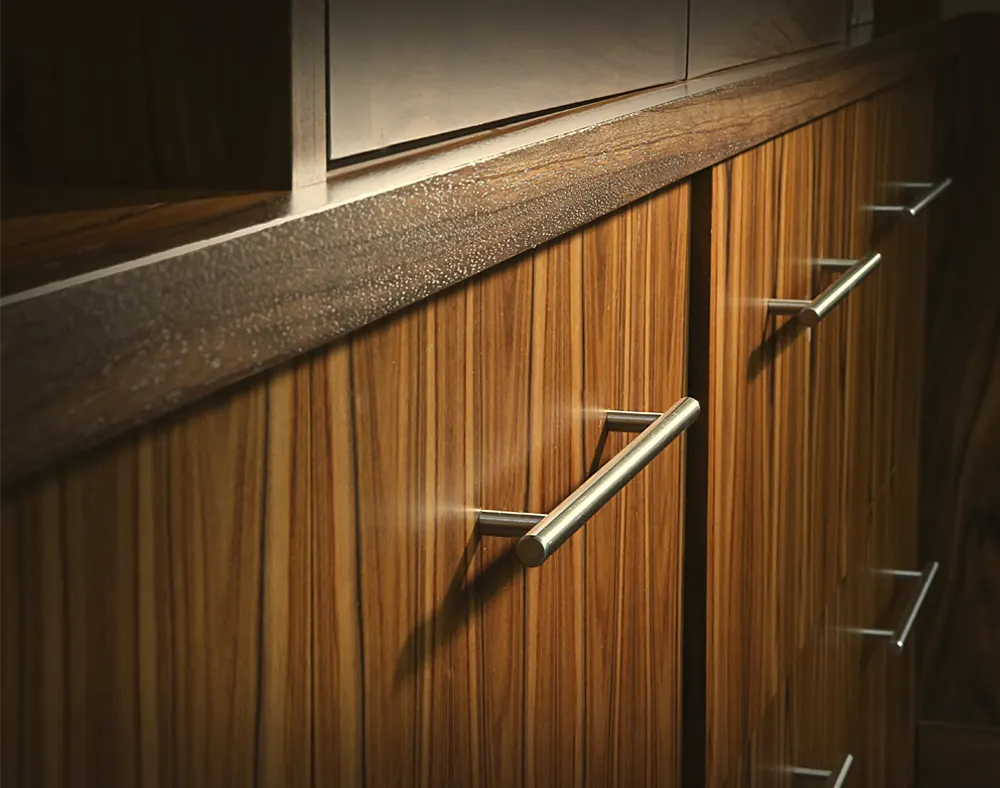
Grain direction is a key element in how a project is perceived. A vertical grain can emphasize height, create a sense of elevation, and give the surface a more architectural feel. A horizontal grain can visually lengthen a surface, strengthen continuity between several panels, or create a more linear effect.
In a project involving several sheets, this direction should remain consistent from one element to another. An unplanned change in grain direction can become very noticeable, especially on adjacent surfaces. It is therefore important to determine from the start whether the grain should run vertically or horizontally, and whether that direction should continue across several panels. This consideration is especially important for walls, doors, furniture fronts, and repeated elements.
Understand the Impact of Species and Cut Type
Each wood species has its own personality. Some offer a fine, subtle grain, while others show stronger contrasts, deeper tones, or more expressive patterns. Even within the same species, the final appearance can vary depending on the tree, the cut, and the selection of sheets.
The cut type also plays a major role. A flat cut often produces a more expressive grain, with cathedral or flame-like patterns. A quarter cut tends to highlight a straighter, more linear grain; depending on the species, it can also reveal certain characteristic reflections, such as the flakes found in oak. A rift cut, especially appreciated for oak, promotes a more uniform and regular appearance by helping limit the presence of these flakes.
In a project involving several sheets, these differences become even more important. A subtle variation on a small surface can become much more noticeable when repeated across several panels. This is why the choice of species and cut should be based on the overall effect desired, not only on an isolated sample.
Choose a Matching Method Suited to the Project
The matching method determines how veneer leaves are placed side by side to form a sheet. It influences the visual rhythm, symmetry, grain repetition, and overall perception of the surface.
- Book matching creates a mirror effect and a more symmetrical appearance. It can highlight the natural character of the wood, but may also emphasize certain variations depending on the species and cut type.
- Slip matching provides a more linear and continuous reading of the grain. It can be a good option when a calmer, more structured & regular surface is desired.
- Random matching creates an appearance closer to solid wood. It can help distribute natural variations in a more diffuse way, making it especially relevant for certain large-surface projects.
- Slip & swing matching can reduce certain visual repetitions while maintaining a regular structure.
The right matching technique depends on the intent of the project. Is the goal a very uniform surface? A more natural effect? Strong symmetry? A more linear appearance? Controlled variation? These questions should be addressed before production, as they directly influence the final result. Since we have specialized in veneer splicing and matching since 1990, we can also help professionals assess which matching method best suits the project’s visual intent, based on the species, cut, dimensions, and desired level of variation.
Consider the Relationship Between Sheets
When several sheets are used in the same project, it is also important to consider how they relate to one another. Some surfaces may stand on their own, while others need to visually connect. For example, two doors installed side by side may require a higher level of grain and color consistency than two panels placed in separate rooms. A full wall may call for a continuous grain reading. A piece of furniture with several fronts may require a balance between regularity and natural variation.
In these situations, the sheet sequence, orientation, and layout should be considered from the planning stage. This helps anticipate how the eye will move from one surface to another and prevents certain sheets from appearing disconnected from the rest of the project.
Adjust Visual Expectations
Natural wood veneer evolves from the material it comes from. Even in a well-planned project, some degree of variation between sheets should be expected. These differences can come from the growth of the tree, the structure of the grain, the wood’s natural tones, or the way the log was sliced. Good planning helps better frame these variations, but it does not eliminate them completely. This is why it is important to establish realistic expectations from the start.
For some projects, a high level of uniformity is desired. For others, more variation and character may be acceptable. In every case, the acceptable level of variation should be defined before the sheets are prepared. This step helps align the expectations of the designer, the manufacturer, the end client, and the production teams.
Plan According to the Final Application
The type of project also influences the decisions to be made. An architectural panel, a door, a furniture front, or a decorative element does not always require the same level of continuity or regularity.
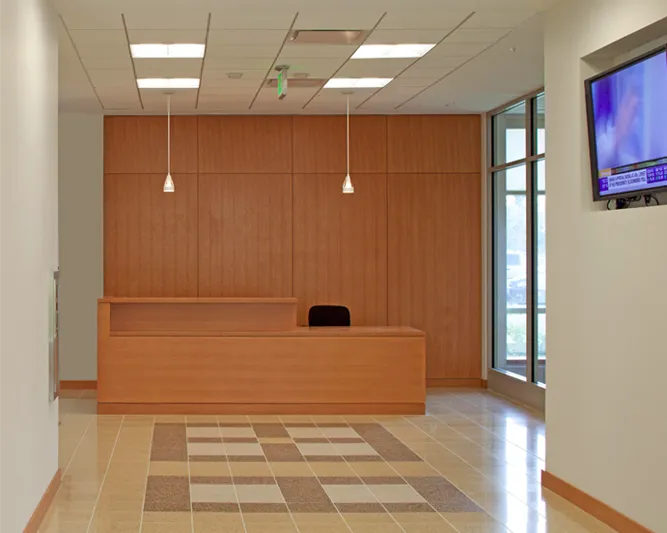
In a commercial or institutional environment, for example, several panels may be visible within the same field of view. Visual consistency then becomes essential. In a furniture project, the focus may be more on the symmetry of the fronts, the grain direction, or the way the elements relate to one another. Veneer planning should therefore take into account the final application, viewing distance, lighting, intended finish, and the proximity between surfaces.
Anticipate for a More Consistent Result
Planning a project with several wood veneer sheets is not only about determining how many sheets will be needed. It is a process that involves the material, the design, the transformation process, and the final result. Quantity, dimensions, grain, matching, and visual expectations are all connected. The earlier these elements are clarified, the easier it becomes to prepare sheets that are consistent with the project’s intent.
As part of this process, our role is also to help professionals ask the right questions before production, so that the selected sheets can respect the project’s constraints and visual intent as closely as possible. Wood veneer offers great visual richness, but that richness requires a certain understanding of the material. By taking the time to plan properly, professionals can better respect the material, facilitate the work of the teams involved, and increase the chances of achieving a result that feels natural, harmonious, and controlled.
Share this article